Construction Contracting 2.0: Embracing Artificial Intelligence to Streamline Business Operations

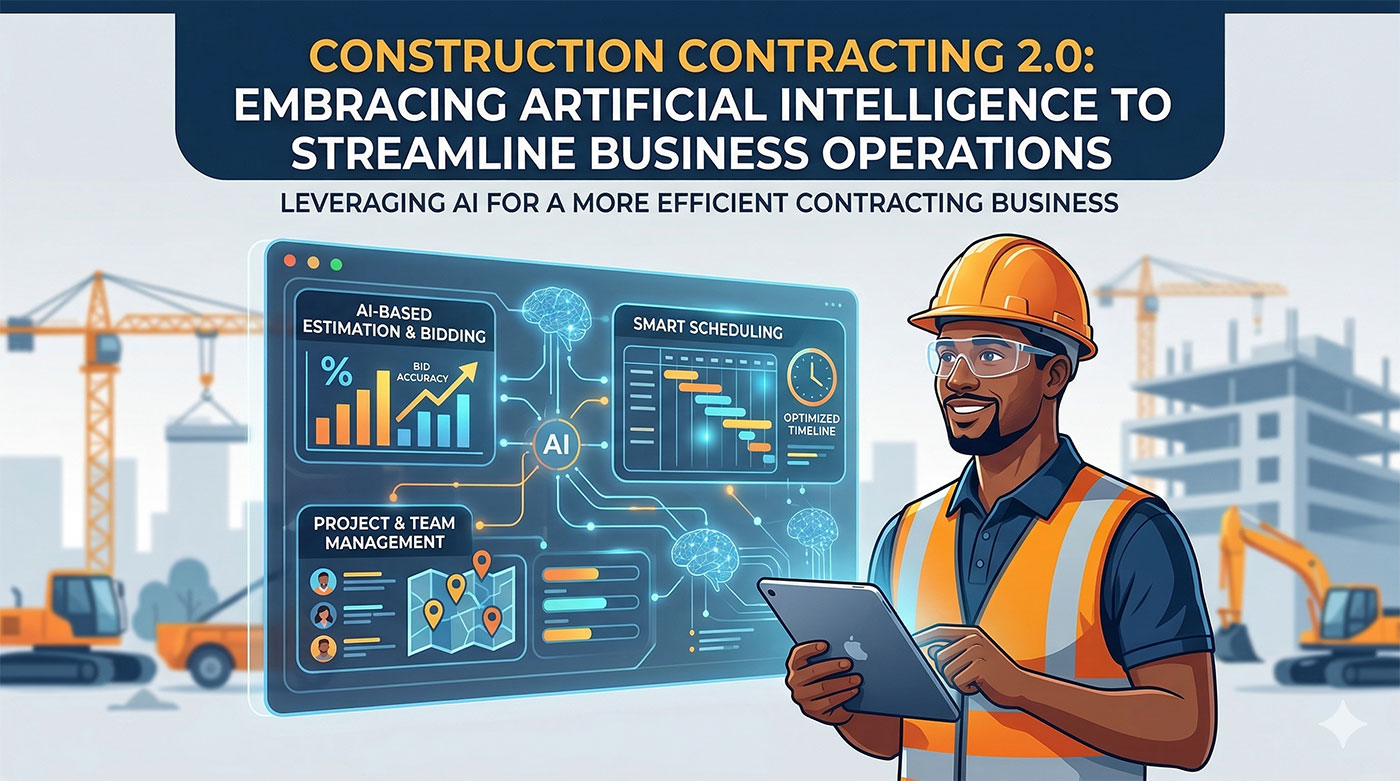
The construction industry is known for its physical demands and intricate project management. However, behind the scaffolding and heavy machinery lies a complex world of business tasks that, if mismanaged, can significantly impact profitability and client satisfaction. For years, construction contractors have grappled with paperwork, scheduling bottlenecks, and the constant challenge of optimizing resources. Enter Artificial Intelligence (AI) – a powerful technology poised to revolutionize how construction businesses operate. While AI might sound futuristic, its practical applications in the construction sector are already delivering tangible benefits, allowing contractors to work smarter, not harder.
This blog post will delve into how construction contractors can leverage AI to streamline their business operations, improve efficiency, and enhance their bottom line. We’ll explore various facets of the contracting business, from bidding and estimation to project management and client communication, and highlight how AI is transforming these areas.
Revolutionizing Bidding and Estimation
One of the most critical and time-consuming tasks for any construction contractor is the bidding and estimation process. Accurately predicting project costs, including labor, materials, and equipment, is essential for securing profitable contracts. Traditional estimation methods often rely on historical data, manual calculations, and, to some extent, intuition. This approach can be prone to errors and biases, leading to inaccurate bids that can result in either lost projects or eroded profit margins.
AI is changing the game in bidding and estimation by introducing data-driven precision. AI-powered software can analyze vast amounts of historical project data, material costs, and even weather patterns to generate highly accurate cost estimates. These AI algorithms can identify patterns and trends that might be missed by human estimators, allowing for more realistic and competitive bids. Furthermore, AI can automate the process of analyzing project specifications and drawings, known as takeoffs. This automation not only saves countless hours but also reduces the likelihood of manual errors that can occur during the takeoff process. By leveraging AI for bidding and estimation, contractors can increase their win rates, improve profitability, and make more informed decisions when pursuing projects.
Optimizing Project Management and Scheduling
Effective project management is the backbone of any successful construction project. Managing schedules, allocating resources, and tracking progress are crucial tasks that require constant attention. Traditional scheduling methods, such as Gantt charts, can be rigid and difficult to update in response to unexpected delays or changes. This can lead to scheduling conflicts, resource overallocation, and project delays.
AI-powered project management software offers a dynamic and intelligent solution. These AI systems can analyze real-time data from various sources, including job site reports, equipment sensors, and weather forecasts, to create and optimize project schedules. If a delay occurs, AI algorithms can automatically adjust the schedule, identify potential bottlenecks, and suggest the most efficient path forward. Additionally, AI can optimize resource allocation by analyzing project requirements and identifying the most suitable labor and equipment for each task. This ensures that resources are utilized effectively, minimizing downtime and maximizing productivity. By implementing AI for project management and scheduling, contractors can keep projects on track, reduce delays, and improve overall operational efficiency.
Enhancing Risk Management and Safety
Construction sites are inherently risky environments, and managing safety is a top priority for any contractor. AI is emerging as a powerful tool for proactively identifying potential hazards and mitigating risks on job sites. Computer vision, a subset of AI, can be used to analyze real-time video feeds from job site cameras to detect safety violations, such as workers not wearing proper personal protective equipment (PPE) or entering hazardous areas. These systems can trigger real-time alerts, allowing site supervisors to take immediate corrective action.
Furthermore, AI can analyze historical data to identify trends in accidents and near-misses. This information can be used to develop targeted safety training programs and implement proactive measures to prevent future incidents. AI can also assist in risk assessment by analyzing various factors, such as project location, complexity, and contractor track record, to predict potential project risks and estimate their potential impact. By integrating AI into their safety and risk management protocols, contractors can create a safer work environment for their employees, reduce the likelihood of costly accidents, and lower their insurance premiums.
Improving Client Communication and Relationship Management
Building and maintaining strong relationships with clients is crucial for long-term success in the construction industry. AI can play a key role in improving client communication and enhancing the overall client experience. AI-powered chatbots can provide clients with instant access to project updates, answer frequently asked questions, and even assist with scheduling meetings. This ensures that clients receive timely information and reduces the administrative burden on contracting teams.
AI can also be used to analyze client feedback and identify areas for improvement. By analyzing comments, reviews, and survey responses, contractors can gain valuable insights into client satisfaction levels and proactively address any concerns. Furthermore, AI can assist in personalization by analyzing client preferences and tailoring communications to their specific needs. By utilizing AI to enhance client communication and relationship management, contractors can build trust, foster loyalty, and increase the likelihood of repeat business.
Overcoming Challenges and Embracing the Future
While the potential benefits of AI in construction are undeniable, it’s essential to acknowledge the challenges associated with its adoption. Implementing AI solutions requires significant upfront investment, data infrastructure, and specialized expertise. Additionally, there can be resistance to change among employees who are accustomed to traditional workflows. However, the long-term benefits of increased efficiency, improved profitability, and enhanced safety far outweigh the initial challenges.
To successfully integrate AI into their operations, construction contractors should start small by identifying specific business areas that can benefit most from automation. Investing in employee training and development is also crucial to ensure that the workforce is equipped with the skills needed to work alongside AI technologies. By embracing AI as a strategic tool rather than a threat, construction contractors can position themselves for success in an increasingly competitive and technologically advanced industry. The future of construction is digital, and those who harness the power of AI will be well-equipped to navigate the complexities of the modern built environment.
Stop losing profit.
Build bids in minutes and track every dime with ProfitDig.
Start Risk-Free30-Day Money Back Guarantee