Stockpile Smart: The Contractor Trick for Beating Material Price Jumps

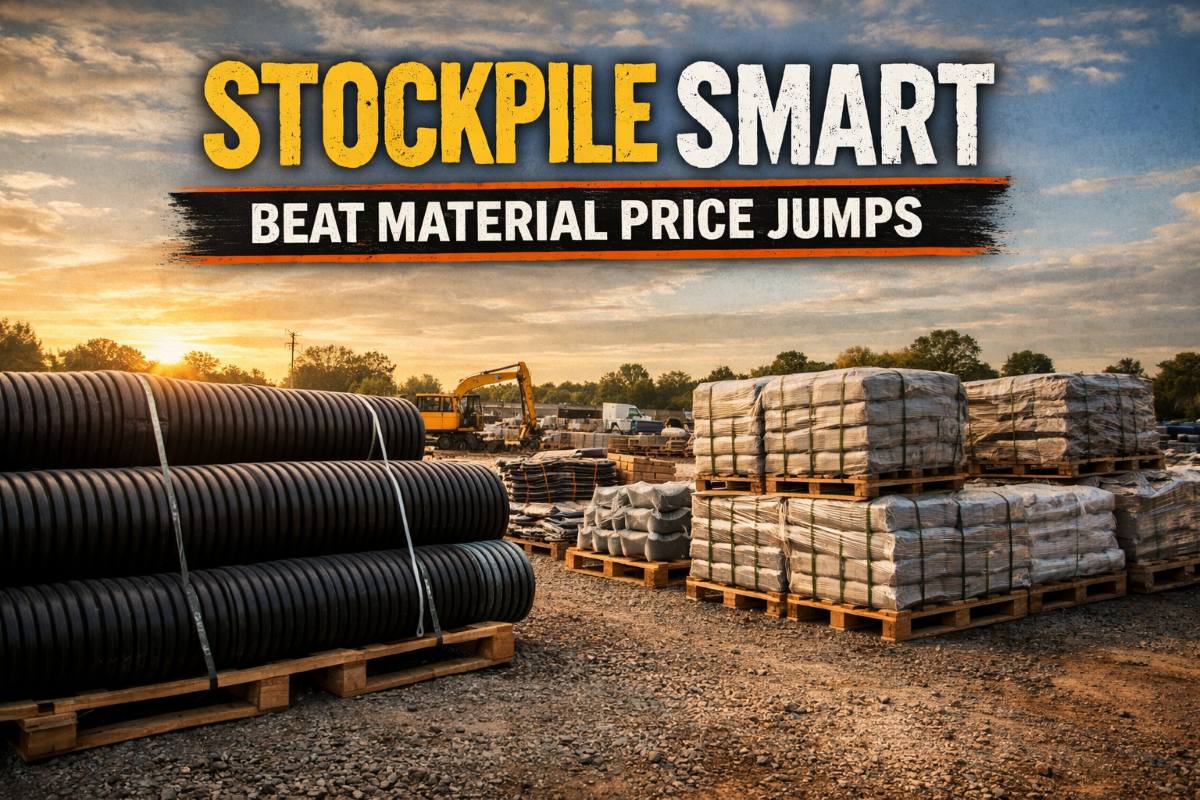
If you have been in construction for more than about five minutes, you already know one thing for sure. Material prices do not stay put.
Fuel goes up and down. Pipe prices jump with no warning. Products that stayed flat for years suddenly spike overnight. And when that happens, the contractor who is not paying attention usually eats the difference.
In a recent ProfitDig Live discussion, the team broke down a simple but powerful strategy contractors use to protect themselves in volatile markets. It is not complicated. It just requires thinking ahead.
That strategy is stockpiling.
This is not about hoarding random materials or filling your yard with stuff you might never use. This is about being intentional with products you already buy regularly and knowing when to pull the trigger.
Let’s break it down.
Why Material Volatility Is Not Going Away
Material volatility is not a one time event. We saw it during COVID. We saw it during fuel spikes. We saw it when resin plants burned and pipe became impossible to find. And we will see it again.
Most price changes come down to supply and demand. Sometimes the swings are slow. Sometimes they are sudden. Either way, contractors are stuck bidding work months before materials are installed.
That gap is where profit gets lost.
The Core Idea Behind Stockpiling
Stockpiling simply means buying materials you know you will use in the near future when the price makes sense.
This works best with items that meet three criteria:
-
You use them often
-
They store well
-
You understand their pricing trends
Pipe, fittings, fire hydrants, fuel, and other consumables are common examples.
If the price drops or you get word that an increase is coming, buying early can lock in your cost and protect your margins.
Relationships Matter More Than You Think
One of the biggest takeaways from the conversation was the importance of relationships with suppliers.
Good sales reps talk. If you ask the right questions, they will often tell you what is coming.
Questions like:
-
Do you see any price increases coming?
-
How long is this price good for?
-
Are there supply issues on the horizon?
Suppliers like contractors who plan ahead because it often means larger, more predictable orders. In many cases, they are happy to give you a heads up.
That advance notice is gold.
Where Do You Put All This Stuff?
Storage is the first practical hurdle.
Some contractors store materials at their shop or yard. Others rent warehouse space. In some cases, suppliers will even hold purchased materials for 60 to 90 days if they have room.
The key is knowing what you can realistically store and how long you can store it.
Fuel tanks, pipe racks, and secure storage areas turn stockpiling from a theory into a real advantage.
Emergency Work Changes the Math
If you do emergency or municipal work, stockpiling is even more important.
Fire hydrants were a perfect example discussed in the video. They stayed the same price for years, then suddenly jumped hard. If you have an emergency contract and a hydrant gets taken out at 2 a.m., you cannot wait two weeks for delivery.
Having critical items on hand allows you to respond immediately and often puts you ahead of competitors who are scrambling.
When Stockpiling Turns Into Profit
One real world story stood out.
During a supply shortage, a contractor had stockpiled PVC pipe earlier at a lower price. A supplier ran out and called asking if he could buy some of that pipe back.
The contractor sold it back at a 40 percent increase.
No trucking. No extra labor. Just smart timing.
That situation will not happen every day, but it proves an important point. Materials are assets. When markets get tight, assets have value.
Protect Yourself with Bid Clauses
Stockpiling works best when paired with smart contract language.
Every contractor should have a clause stating how long their bid pricing is valid. That timeframe should align with how long suppliers are guaranteeing their quotes.
If your supplier only guarantees pricing for 24 hours, you cannot responsibly guarantee your bid for 30 days.
Always check supplier quote expiration dates and match your proposal language accordingly.
How ProfitDig Helps You Stay Ahead
Tracking all of this manually is a headache. That is where tools matter.
With ProfitDig, you can:
-
Set materials by vendor
-
Track how long pricing is valid
-
Set reminders to recheck prices before bids expire
That way, you are never bidding with outdated numbers and never guessing when prices change.
It is one more way to stay proactive instead of reactive.
Final Thought: Manage Your Materials Like a Pro
Stockpiling is not about gambling. It is about awareness, timing, and discipline.
When you understand your materials, maintain supplier relationships, protect your bids, and use the right tools, material volatility becomes manageable.
And in some cases, it can even become profitable.
Manage your materials, or they will manage your margins.
Stop losing profit.
Build bids in minutes and track every dime with ProfitDig.
Start Risk-Free30-Day Money Back Guarantee