Understanding Equipment Costs in Your Bids

Understanding Equipment Costs in Your Bids
When you’re deep into the trenches of a construction job, it’s easy to overlook the costs that come with owning and operating your equipment. But let me tell you, if you’re not factoring those in, you might be digging your own financial grave. Let’s walk through what you need to keep in mind about equipment costs, maintenance, and how to include them in your bids.
Why Equipment Costs Matter
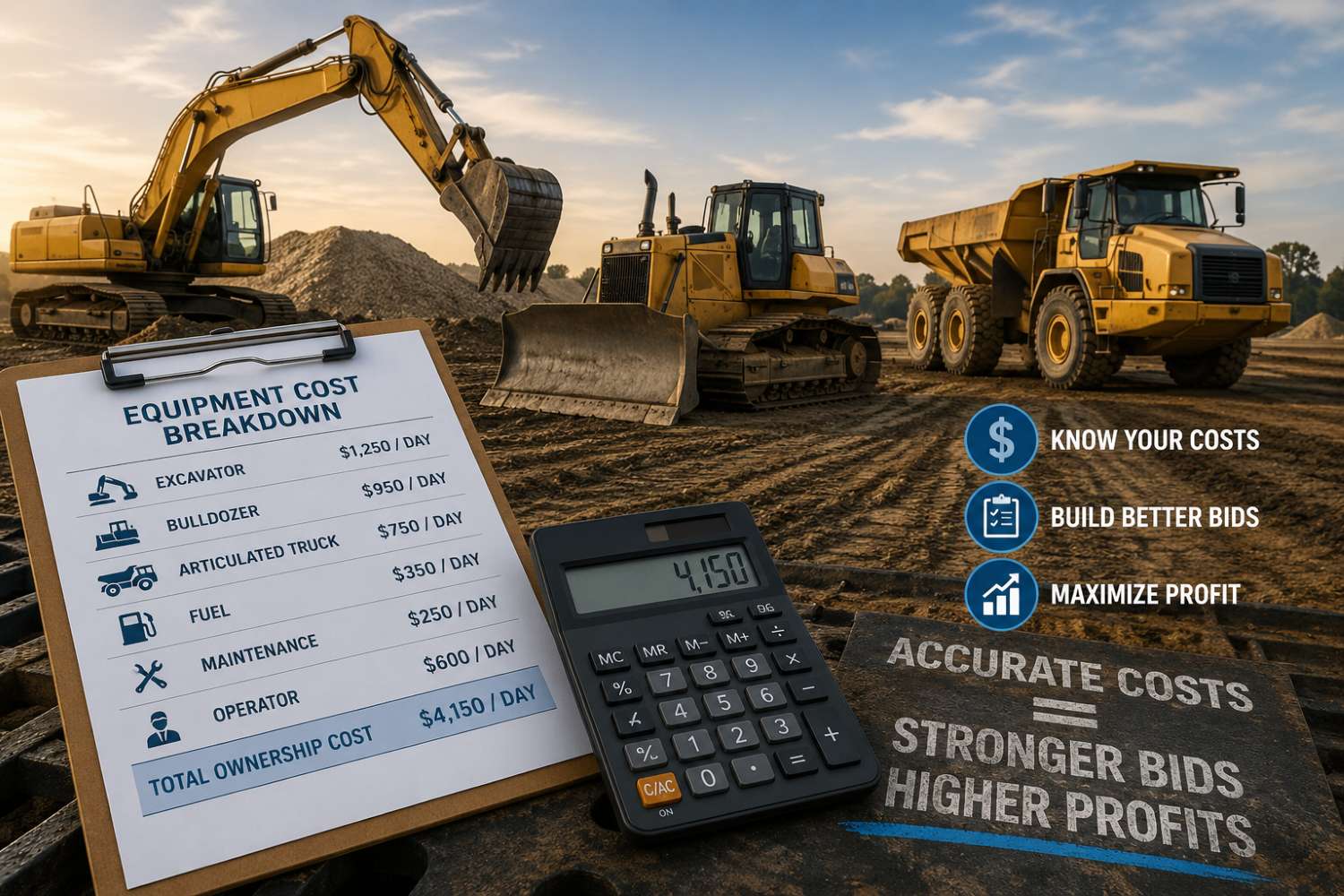
Every piece of equipment you own, from heavy machinery to your pickup truck, has costs associated with it. If you’re not accounting for these, you’re likely underpricing your services. Understanding the true cost of your equipment helps make sure you’re not just covering your expenses but making a profit too.
What to Include in Your Bids
Here’s a checklist of what to consider when factoring equipment costs into your bids:
- Purchase Cost: This is the initial cost of the equipment. Make sure to factor this in, especially if you financed the purchase.
- Depreciation: Equipment loses value over time. Factor in how much your equipment is worth each year.
- Maintenance Costs: Don’t forget about regular maintenance. Whether it’s oil changes or tire replacements, every bit adds up.
- Fuel Costs: If your equipment runs on fuel, include those expenses too. Fluctuating fuel prices can impact your money.
- Transportation Costs: If you have to drive your equipment to a job site, don’t forget to include those transportation costs in your calculations.
- Insurance: Protecting your equipment is important. Include insurance costs in your overhead or as a direct line item in your bids.
- Labor for Operation: Consider the labor cost for someone operating the equipment. What are you paying them per hour?
Example Calculation
Let’s say you own a backhoe that costs you $30,000. You anticipate it will last about 10 years but will be worth around $15,000 after that time. Here’s how you might walk through the costs:
- Depreciation: $1,500 per year ($30,000 – $15,000 = $15,000 / 10 years)
- Maintenance: Estimate $500 per year for routine upkeep.
- Fuel: Assume you spend about $1,200 on fuel annually.
- Insurance: Let’s say your insurance is $600 per year.
- Labor: If the operator makes $25/hour and works 200 hours a year with the backhoe, that’s $5,000.
So, on an annual basis, your costs for the backhoe would look like this:
- Total Annual Cost: $1,500 (depreciation) + $500 (maintenance) + $1,200 (fuel) + $600 (insurance) + $5,000 (labor) = $8,800
Now, divide that by the number of projects you expect to use it for in a year to get a per-project cost.
Common Mistakes to Avoid
- Ignoring Maintenance Costs: It’s easy to put off thinking about maintenance until something breaks. Don’t do it. Include these costs in your bids to avoid costly surprises later.
- Not Tracking Usage: Keep a log of how often each piece of equipment is used. This can help you better allocate costs in future bids.
- Overlooking Transportation: If you’re driving equipment to different sites, every mile counts. Track your mileage and include that in your calculations.
- Underestimating Insurance: Always get the best quotes and factor in the coverage you really need. It’s better to be safe than sorry.
When you’re putting together a bid, remember that every piece of equipment comes with its own set of costs. By tracking these carefully and including them in your bids, you’re not just covering your bases, but also making sure your business stays profitable.
At the end of the day, knowing your numbers is key. If you’re tired of guessing or unsure how to track these costs, consider looking into tools like ProfitDig. They help you bid smarter and keep tabs on all your job costs without the hassle of expensive software.
Stop losing profit.
Build bids in minutes and track every dime with ProfitDig.
Start Risk-Free30-Day Money Back Guarantee