Why February Is When Bad Bids Finally Catch Up With You

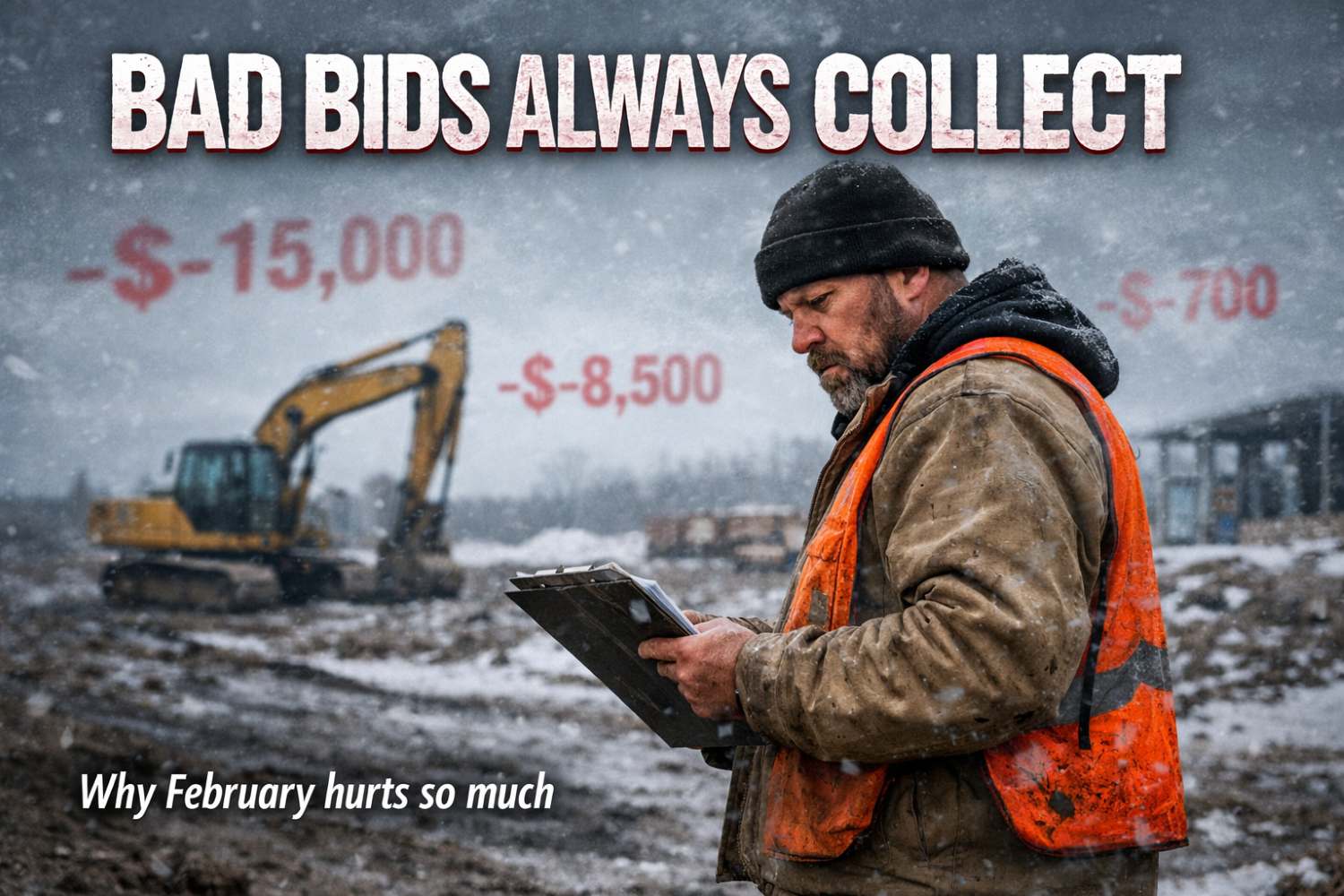
Why February Feels So Brutal for Contractors
February is when the math stops lying.
The jobs you bid last fall are far enough along now that you can’t hide from the numbers anymore. Labor ran long. Materials cost more than expected. Subs weren’t as cheap as you hoped.
Back in October, everything looked fine on paper.
In February, the bank account tells the truth.
This is the month when bad bids finally show up to collect.
Bad Bids Don’t Hurt Right Away (And That’s the Problem)
One of the most dangerous things about underbidding is that it doesn’t feel painful at first.
Early on, you’re busy.
Money is coming in.
The job looks profitable.
Then reality creeps in:
-
Extra labor hours
-
Small change orders that don’t get billed
-
Fuel, materials, and rentals adding up
-
Admin time nobody priced into the job
By the time you realize the job is losing money, you’re already committed.
February is when those slow leaks turn into real bleeding.
Winter Makes Every Mistake More Expensive
Winter doesn’t create bad bids.
It exposes them.
Cold weather slows crews down.
Short days reduce productivity.
Schedules slip, and overtime sneaks in.
If your pricing was tight to begin with, winter finishes the job.
A bid that barely worked in good weather usually fails in February.
The Real Reason This Keeps Happening
Most contractors don’t lose money because they’re lazy or dumb. They lose money because they don’t review past jobs before bidding new ones.
They’re guessing instead of learning.
If you don’t know:
-
What labor actually cost
-
Where you lost time
-
Which jobs paid off and which ones didn’t
Then every new bid is just another gamble.
And February is when the house wins.
The February Fix: Look Back Before You Bid Forward
This is the best time of year to stop and take inventory.
Before you price spring work, do this:
-
Review 1–2 recently finished jobs
-
Compare estimated labor vs. actual labor
-
Look at material overruns
-
Ask one hard question:
“Would I do this job again at that price?”
If the answer is no, your next bid needs to change.
Not someday.
Now.
Busy Doesn’t Mean Profitable
A lot of contractors are still working nonstop in February and still struggling to make money.
That’s not bad luck.
That’s bad information.
If you don’t track job costs, you won’t see problems until it’s too late. And by then, the bid is already locked in.
Good contractors learn from every job.
Great contractors use that data to price the next one better.
Final Thought: February Is a Gift (If You Use It)
February is uncomfortable for a reason.
It’s the pause before spring.
The moment when you can fix pricing mistakes before the next wave of work hits.
Bad bids always catch up.
The only question is whether you’ll let them do it again.
ProfitDig helps contractors track job costs, review past bids, and price work with real numbers instead of guesses.
Priced for reality – because most contractors can’t afford expensive software, but they can’t afford bad bids either.
Stop losing profit.
Build bids in minutes and track every dime with ProfitDig.
Start Risk-Free30-Day Money Back Guarantee