The Hidden Costs Killing Your Bids (And Your Profit Margins)

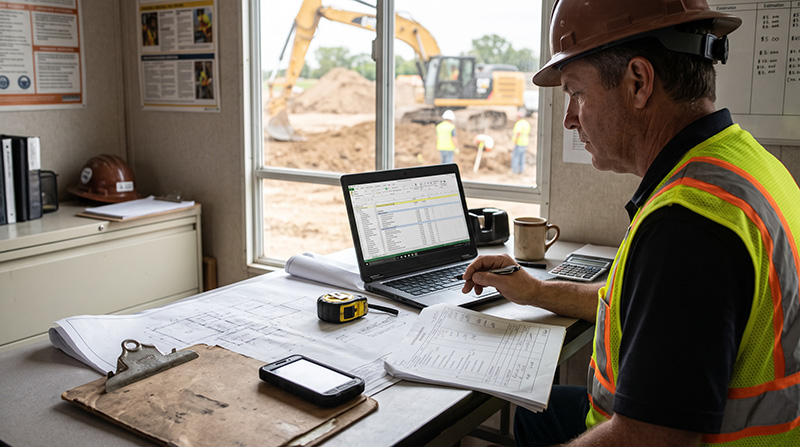
Every contractor knows the thrill of getting the call that your proposal was accepted. But there is a distinct difference between winning a project and actually making money on it. In the construction and dirt work industry, winning the race to the bottom by submitting the lowest number often means you just bought yourself a financial liability.
Many contractors focus intensely on the obvious line items, such as primary materials, direct labor, and major equipment overhead. However, it is the secondary, creeping costs that silently eat away at profit margins. If your jobs look incredibly profitable on paper but your bank account tells a different story at the end of the month, you are likely suffering from estimating blind spots.
Here are the four most common hidden costs that compromise your bids and how to protect your bottom line.
1. Equipment Logistics and Mobilization
Contractors usually know down to the penny what an excavator or dozer costs to run per hour once it is digging dirt. But what does it cost to get that heavy iron to the job site in the first place?
A massive estimating oversight is assuming equipment logistics will simply be absorbed by general overhead. The reality is that moving heavy machinery is expensive. When estimating, you must account for transport fees, escalating fuel surcharges, wide load permits, and the wages for the driver. Just as importantly, contractors often remember to charge for mobilization but completely forget about demobilization at the end of the project.
The Fix: Treat mobilization and demobilization as distinct, mandatory line items on every single bid. If a piece of equipment has to cross public roads, there must be a dollar amount attached to that movement in your proposal.
2. Site Prep and Unforeseen Contingencies
Assuming a perfect scenario for ground conditions and site access is the fastest way to lose money on a job. Mother Nature and poor site planning do not care about your initial budget.
Contractors frequently fail to estimate for the realities of the physical site. What happens when unexpected rain requires three days of active dewatering before you can resume trenching? What if the soil you planned to use for backfill is unsuitable and has to be exported while you import structural fill? Even above ground, staging area constraints can force delivery trucks to wait, bottlenecking your entire crew.
The Fix: Build in a standard contingency percentage based on your historical data for site prep delays. Additionally, ensure your contracts include clear, protective exclusions for hidden subsurface conditions. If you hit massive rock when you expected clay, your contract needs to trigger a change order instead of a loss.
3. The True Cost of Waste Management
Waste management is often slapped onto an estimate as a flat, arbitrary fee. You budget for one or two dumpster pulls, but by the end of the project, you have needed four.
Local landfill tipping fees are escalating rapidly across the country, and waste haulers are passing their fuel surcharges directly to you. Beyond the hard costs of dumpsters, there is a massive hidden labor cost. How many unbilled hours does your highly paid crew spend doing daily site sweeps, picking up debris, and loading waste instead of doing productive trade work?
The Fix: Track your waste and cleanup costs meticulously by project type to establish an accurate historical baseline. Charge for the dumpsters, the tonnage, and the labor required to keep the site compliant and safe.
4. Administrative Creep and Unproductive Time
A fundamental flaw in many labor estimates is the assumption that a standard shift equals a full day of productive, billable output. In reality, a significant portion of your crew’s day is eaten up by necessary but unproductive tasks.
This includes time spent waiting on utility locators to mark the site, mandatory daily safety briefings, running out to grab forgotten materials, and the administrative duties your foremen handle from the cab of their truck. If you are paying your crew for 40 hours a week but only billing the client for the 32 hours they spent actively moving dirt, you are taking a massive hit on labor.
The Fix: Factor in a specific percentage of unproductive labor hours to your estimates. Ensure your proposed hourly rate accounts for the mobilization of the crew each morning and the cleanup each afternoon.
Systematizing Your Estimates
The reason these line items fall through the cracks is that too many contractors still rely on memory, scratchpads, or overly complicated spreadsheets that are easily broken.
To scale a profitable business, you need repeatability. Using dedicated estimating and job costing software allows you to create standardized bid templates. When items like mobilization, daily site cleanup, and weather contingencies are hardcoded into your master template, it becomes impossible to accidentally leave them out. A platform like ProfitDig connects your initial estimate directly to your field costs, allowing you to see exactly where your projections matched reality and where you need to adjust for the next bid.
A profitable job starts with a brutally honest estimate. Audit your last three completed jobs to see exactly where hidden costs ate into your margins, update your templates, and stop leaving your hard earned money on the table.
Stop losing profit.
Build bids in minutes and track every dime with ProfitDig.
Start Risk-Free30-Day Money Back Guarantee