Understanding Your Budget: Bidding Basics for Contractors

Understanding Your Budget: Bidding Basics for Contractors
When it comes to bidding on a new project, knowing your budget is non-negotiable. You might think of your quote or proposal as just a number, but it’s much more. It’s your working budget. This figure includes not just your raw costs but also your overhead and profit margins. In this post, we’ll look at how to set that budget correctly and what you need to include in your proposals to avoid any surprises later.
What to Include in Your Budget
Your budget needs to be based on your actual costs before markup. That means you’re taking a close look at:
- Materials: Get accurate quotes from suppliers. Make sure you understand the current pricing and any possible price changes.
- Labor: Know how many hours the job will take and the labor rates for your crew or subcontractors.
- Equipment Costs: Factor in any equipment rentals or usage costs.
- Overhead: This includes everything from insurance to office supplies. Make sure you’re clear on what your overhead costs are per job.
- Profit Margin: This is what you add on top of your costs. Typically, contractors aim for a markup that covers both profit and overhead.
Proposal Details: What to Include
When you’re putting together your proposal, clarity is key. Here are the components you should always include:
- Scope of Work: Clearly outline what you’re going to do. Be specific to avoid misunderstandings.
- Line Items: Walk through your costs into line items for materials, labor, equipment, and overhead. This transparency builds trust with your client.
- Total Bid Amount: Make sure this is clear and includes everything from the breakdown.
- Expiration Date: If your supplier holds a quote for 15 days, make sure your proposal reflects that. This helps you avoid honoring old material prices.
- Payment Terms: Specify when payments are due and any deposit requirements.
Sample Proposal Wording
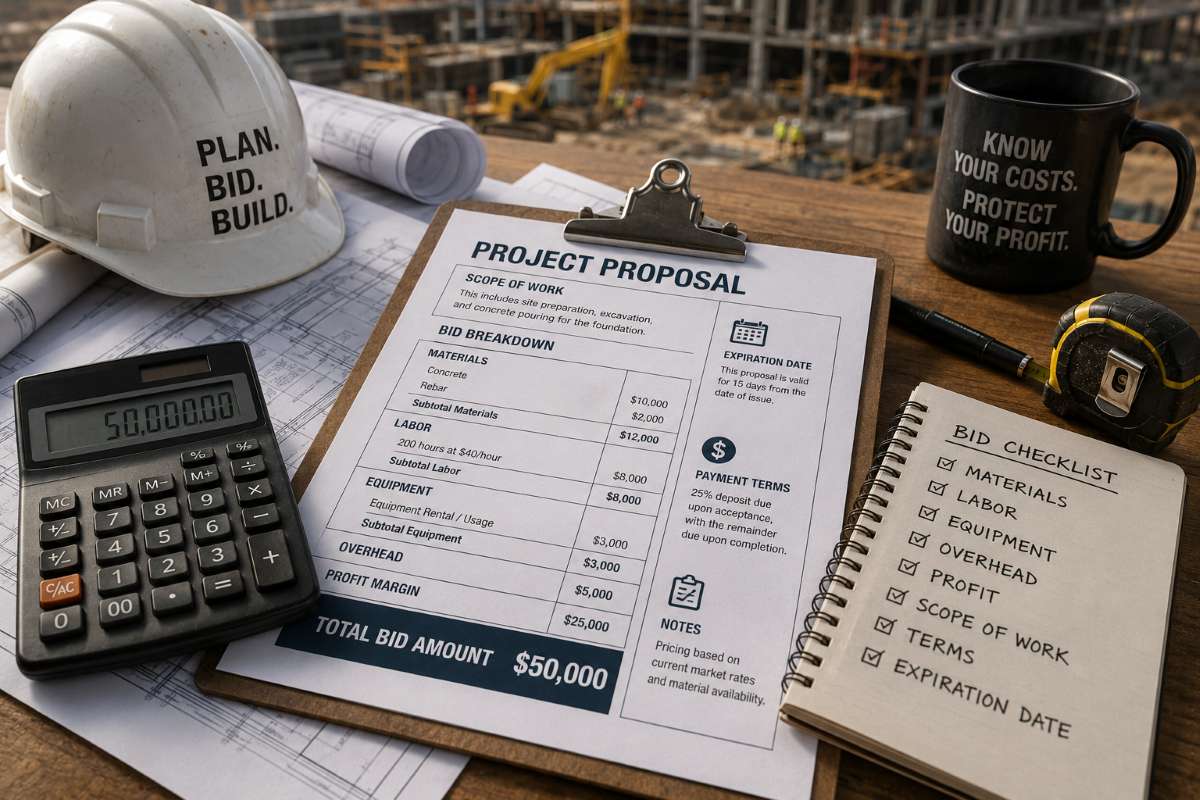
Here’s a quick example of how you might word a section of your proposal:
Total Bid Amount: $50,000
Scope of Work: This includes site preparation, excavation, and concrete pouring for the foundation.
Materials:
– Concrete: $10,000
– Rebar: $2,000
Labor:
– 200 hours at $40/hour: $8,000
Overhead: $5,000
Profit Margin: $25,000
Expiration Date: This proposal is valid for 15 days from the date of issue.
Payment Terms: 25% deposit due upon acceptance, with the remainder due upon completion.
Common Mistakes to Avoid
It’s easy to overlook details when you’re busy, but these common mistakes can cost you:
- Not Tracking Costs Separately: Make sure that you’re tracking job costs against your raw costs, not your profit and overhead. This will give you a clearer picture of your budget status.
- Overestimating Labor Hours: Be realistic about how long tasks will take. Overestimating can inflate your bid unnecessarily.
- Ignoring Equipment Costs: Failing to include equipment usage can eat into your margins. Always factor this into your budget.
- Not Updating Quotes: Material costs can fluctuate. Always check for the most current pricing before sending out a proposal.
Creating a Working Budget
Your working budget is essentially your roadmap for the job. Here’s how to set it up:
- Gather Quotes: Get your quotes for materials, labor, and equipment as early as possible.
- Calculate Overhead: Determine how much overhead you need to allocate to this job.
- Estimate Profit: Decide on a markup that covers your costs and provides a profit margin.
- Finalize Your Bid: Put everything together and make sure your proposal is clear.
Understanding your budget and how to structure your proposals is key to running a successful contracting business. By focusing on your raw costs and being transparent with your clients, you set yourself up to avoid surprises and make sure that you’re not giving up profit. Tools like ProfitDig can help make easier your bidding process, making sure you have the right numbers at your fingertips. Remember, it’s all about knowing your costs so you can bid with confidence.
Stop losing profit.
Build bids in minutes and track every dime with ProfitDig.
Start Risk-Free30-Day Money Back Guarantee